
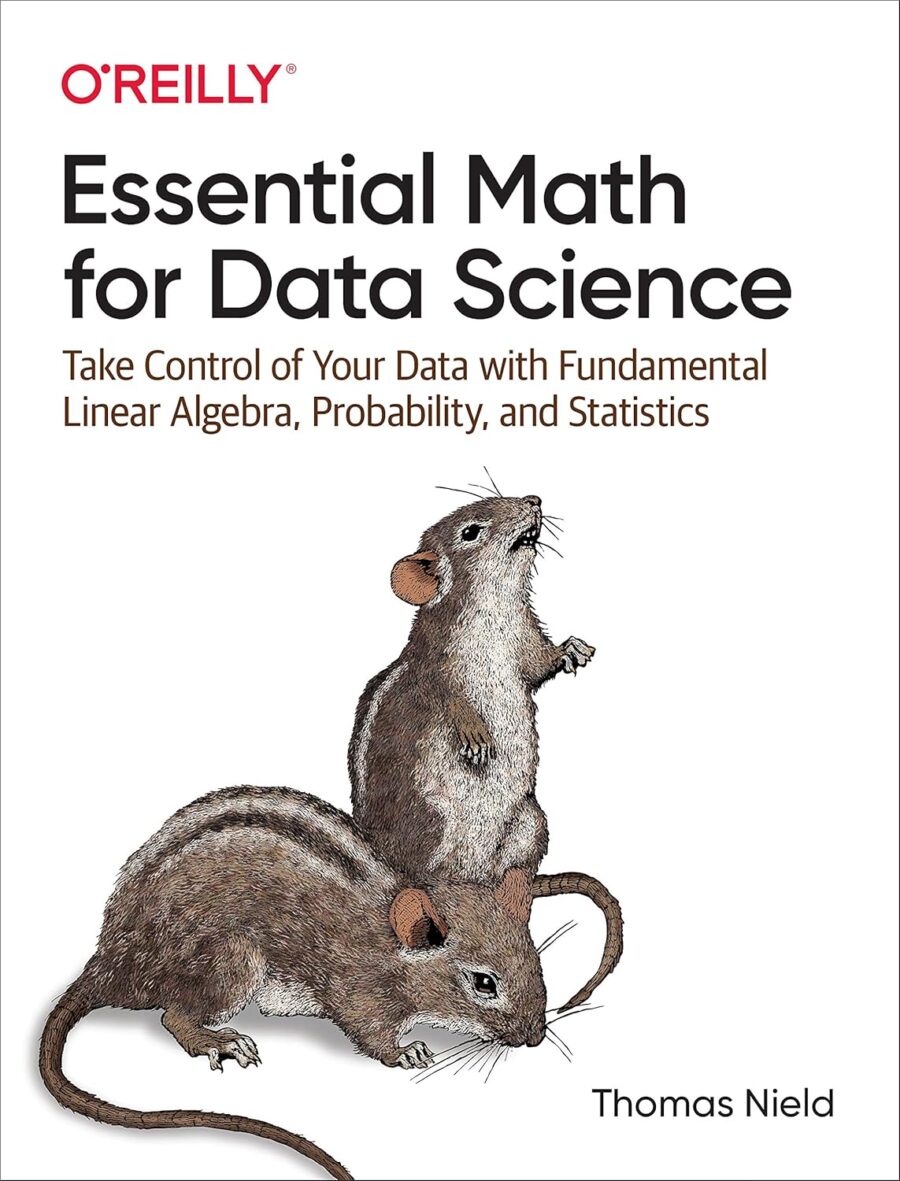
If you’re planning to build a career in data science, machine learning, or artificial intelligence, having a strong mathematical foundation is essential. Essential Math for Data Science: Take Control of Your Data with Fundamental Linear Algebra, Probability, and Statistics by Thomas Nield is one of the most recommended books for beginners who want to understand the mathematics behind modern data science. The book explains complex concepts in a practical, easy-to-understand way without overwhelming readers with advanced mathematical notation.
Why Learn Math for Data Science?
Many aspiring data scientists focus only on programming languages like Python or SQL. However, understanding the mathematical concepts behind algorithms helps you build better models, interpret results accurately, and solve real-world problems with confidence.
This book covers the essential mathematical topics used in data science, including:
- Linear Algebra
- Probability
- Statistics
- Calculus
- Machine Learning Mathematics
- Hypothesis Testing
- Regression Models
Rather than presenting abstract formulas, the author explains how each topic directly applies to real data science projects.
Easy-to-Follow Learning Approach
One of the biggest strengths of Essential Math for Data Science is its beginner-friendly writing style. Thomas Nield simplifies difficult mathematical concepts using plain English, practical examples, and Python code.
Readers learn how mathematical ideas power popular machine learning algorithms such as:
- Linear Regression
- Logistic Regression
- Neural Networks
- Matrix Operations
- Vector Calculations
The book also demonstrates how to use popular Python libraries like NumPy, SymPy, and scikit-learn while learning mathematical concepts, making it both practical and hands-on.
Who Should Read This Book?
This data science math book is ideal for:
- Beginners entering data science
- Machine learning students
- Python developers
- AI enthusiasts
- Computer science students
- Data analysts
- Self-taught programmers
Even readers with limited mathematical backgrounds can comfortably follow the explanations because the author gradually introduces concepts from basic to advanced levels.
What Makes This Book Different?
Unlike traditional mathematics textbooks, this guide focuses only on the concepts that matter most for modern data science careers. Instead of lengthy theoretical discussions, each chapter emphasizes practical understanding and real-world applications.
Some of its standout features include:
- Simple language for beginners
- Real-world data science examples
- Step-by-step explanations
- Practical Python implementations
- Career-focused mathematical concepts
- Clear progression from basics to advanced topics
This approach helps readers develop confidence without feeling intimidated by complicated equations.
Why It Is Worth Reading
Data science interviews often test mathematical understanding as much as programming skills. Learning probability, statistics, and linear algebra enables professionals to make better decisions when building predictive models.
Thomas Nield’s book bridges the gap between theory and practical application, making it easier to understand why machine learning algorithms work instead of simply memorizing code.
Whether you’re preparing for a data science job, improving your machine learning knowledge, or strengthening your analytical thinking, this book serves as an excellent reference.
Final Thoughts
Essential Math for Data Science is an outstanding resource for anyone serious about learning the mathematical foundations of data science and machine learning. Its practical examples, beginner-friendly explanations, and focus on real applications make it one of the best books available for aspiring data scientists.
If you’ve been avoiding math because it seemed too difficult, this book offers an approachable path to mastering the essential concepts needed for success in today’s data-driven world. With clear explanations of linear algebra, probability, statistics, calculus, and machine learning mathematics, it provides the knowledge required to confidently understand and apply modern data science techniques.