
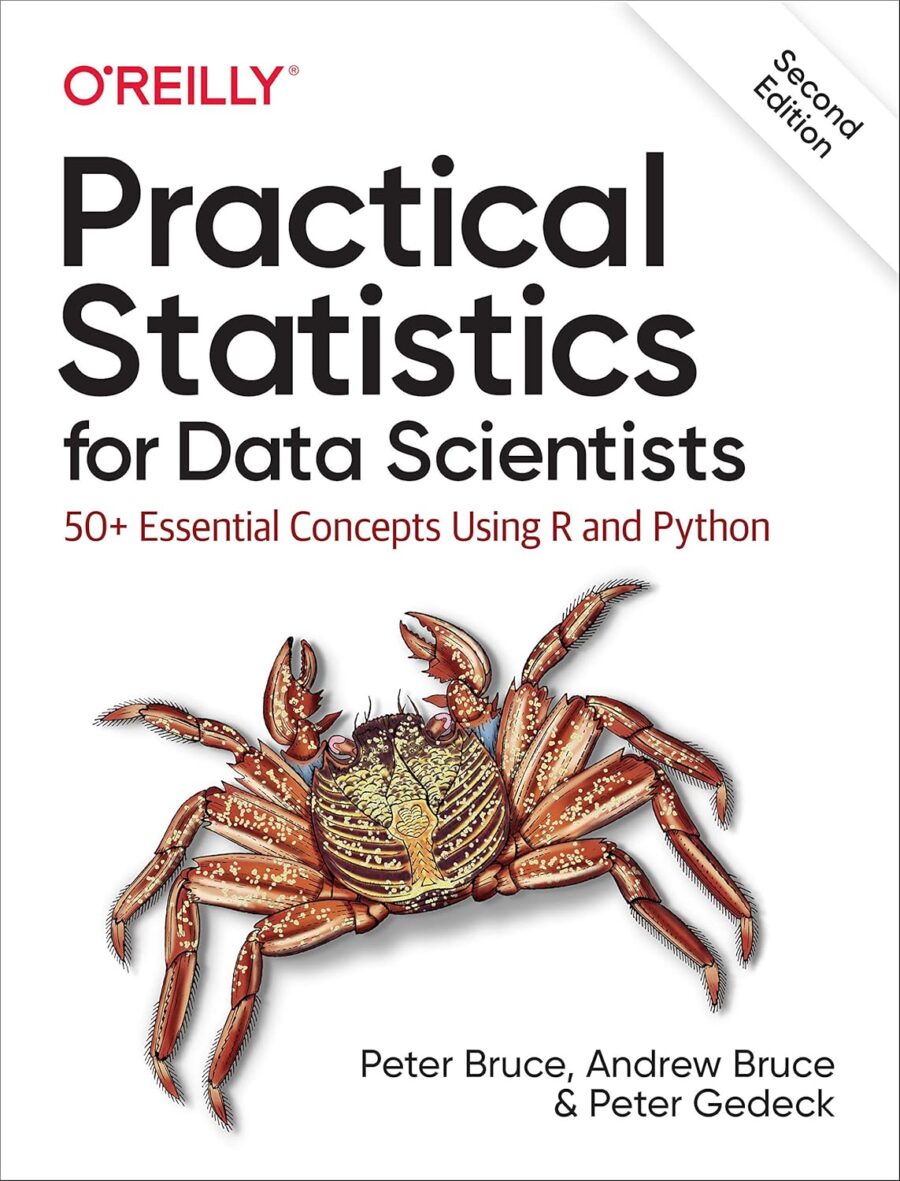
Practical Statistics for Data Scientists
In the rapidly evolving world of data science, statistics is the foundation of meaningful data analysis and machine learning. Practical Statistics for Data Scientists: 50+ Essential Concepts Using R and Python is one of the most valuable resources for professionals and beginners who want to strengthen their statistical knowledge while applying it directly using modern programming languages. Instead of focusing on complex mathematical proofs, this book emphasizes practical statistical techniques that every data scientist should know.
Why Statistics Is Essential for Data Science
Many aspiring data scientists learn programming languages like Python or R but struggle to understand the statistical concepts behind predictive models and data analysis. Without a solid understanding of statistics, it becomes difficult to interpret data correctly or build reliable machine learning models.
This book bridges that gap by explaining more than 50 essential statistical concepts using practical examples. Readers learn not only the theory but also how to implement statistical methods using both R and Python, making it an excellent guide for real-world applications.
What You’ll Learn
The book covers a wide range of topics that are fundamental to data science and analytics, including:
- Exploratory Data Analysis (EDA)
- Data Visualization
- Probability and Probability Distributions
- Sampling Techniques
- Statistical Experiments
- Hypothesis Testing
- Regression Analysis
- Classification Methods
- Resampling Techniques
- Bootstrap and Permutation Tests
- Bayesian Statistics
- Machine Learning Basics
Each topic is presented with practical examples that demonstrate how statistical concepts solve real business and research problems.
Learn Statistics with R and Python
One of the book’s greatest strengths is its dual-language approach. Every statistical concept is demonstrated using both R and Python, allowing readers to work with the programming language they prefer.
Python users benefit from examples using popular libraries such as:
- Pandas
- NumPy
- SciPy
- Scikit-learn
Meanwhile, R users can follow equivalent examples using widely used statistical packages. This makes the book suitable for data analysts, researchers, and students regardless of their programming background.
Beginner-Friendly Yet Practical
Unlike traditional statistics textbooks filled with mathematical derivations, Practical Statistics for Data Scientists focuses on practical understanding. The explanations are concise, easy to follow, and directly connected to data science workflows.
Instead of memorizing formulas, readers learn when to use specific statistical methods, how to interpret results, and how to avoid common analytical mistakes. This practical approach helps build confidence while working on real datasets.
Who Should Read This Book?
This book is an excellent resource for:
- Aspiring Data Scientists
- Machine Learning Engineers
- Data Analysts
- Business Intelligence Professionals
- Python Developers
- R Programmers
- Computer Science Students
- Researchers working with data
Whether you’re just beginning your data science journey or already have programming experience, the book provides valuable statistical insights that improve analytical decision-making.
Key Benefits of the Book
Some of the major advantages of reading this book include:
- Covers over 50 essential statistical concepts.
- Practical examples using both R and Python.
- Focuses on real-world data science applications.
- Explains statistical thinking without unnecessary complexity.
- Helps readers understand machine learning from a statistical perspective.
- Suitable for beginners and experienced professionals alike.
These features make it one of the most recommended statistics books for anyone pursuing a career in data science.
Why This Book Stands Out
Many statistics books either focus heavily on theory or assume readers already possess advanced mathematical knowledge. This book takes a different approach by emphasizing practical implementation and interpretation.
Readers learn how statistical methods support data-driven decisions, improve predictive models, and validate analytical findings. The hands-on examples make difficult concepts easier to understand and immediately applicable to everyday data science tasks.
Final Thoughts
Practical Statistics for Data Scientists: 50+ Essential Concepts Using R and Python is an outstanding guide for anyone looking to master the statistical foundations of data science. By combining clear explanations with practical coding examples in both R and Python, the book makes complex statistical ideas accessible and useful for real-world projects.
Whether you’re preparing for a data science interview, building machine learning models, or improving your analytical skills, this book offers the practical statistical knowledge needed for success. Its focus on essential concepts, hands-on implementation, and real-world applications makes it a must-read resource for every aspiring data scientist, analyst, and machine learning practitioner.
Also read: Python for Data Analysis pdf by Wes McKinney